Many beginners want to know how to improve faster in martial arts classes, especially when progress starts to feel slow. You put in the time, you show up to every session, and yet something still feels stuck.
The answer is not just about training more hours. It is about training smarter, building strong basics, and creating the right habits from day one.
The truth is, most students hit a wall because they focus on advanced moves before their fundamentals are solid. We see this happen all the time. A beginner rushes toward flashy techniques while the black belts quietly drill the same basics they learned as white belts.
Understanding martial arts fundamentals for beginners provides the foundation for better balance, timing, control, and technique as training becomes more advanced.
Students in adult martial arts can apply these same fundamentals to improve their technique, fitness, focus, and overall performance as their training develops.
Progress in martial arts is not a race. But with the right approach, including consistent practice between classes, smart self-training, and honest progress tracking, you can move through the levels faster than you think.
We put together this complete guide to help you break through plateaus, sharpen your muscle memory, and get real results from every class you attend.
How to Improve Faster in Martial Arts Classes: Practical Beginner Strategies
We can speed up progress with smart, consistent habits. But most beginners do not realize that what we do outside of class matters almost as much as what we do inside it. Small, daily actions build big results over time.
The good news is that faster improvement does not require natural talent. It requires the right approach. Once we understand that, everything starts to click.
Structured martial arts classes give students regular opportunities to receive instruction, practice with partners, and correct mistakes in real time. The work we do between those sessions then reinforces what we have already learned.
How to Practice Between Martial Arts Classes
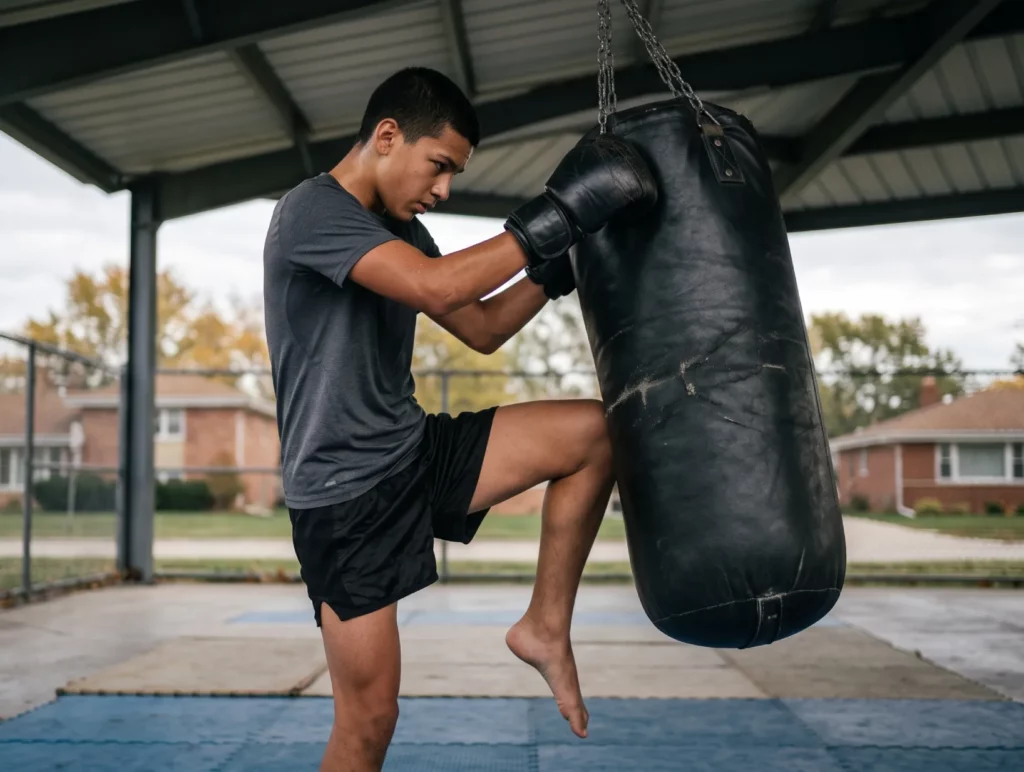
Solo practice is one of our strongest improvement tools. Self-training martial arts at home fills the gaps between sessions. It also helps us build martial arts muscle memory much faster than class time alone allows.
Think about it this way. We attend class two or three times a week. But our bodies learn best through repetition spread across many days. Practicing between classes is where we can reinforce our martial arts practice frequency.
- Drill techniques for 15 to 20 minutes daily
- Use a mirror to self-correct your form
- Shadow spar to build muscle memory faster
- Review class recordings or technique videos regularly
- Stretch and condition your body on rest days
When we shadow spar, we practice techniques in a flowing, realistic way. This trains our brain and body to respond with less hesitation. That automatic response is exactly what muscle memory means in a real sparring situation.
Even 15 minutes a day adds up fast. Over a month, that is around seven extra hours of training. That kind of consistency can make a noticeable difference in how quickly we progress.
How to Get Better at Martial Arts Classes During Training
We improve faster when we train with real intention. Simply showing up is not enough. We need to be mentally present and focused on getting better during every session.
One of the best beginner martial arts class improvement habits is asking our instructor specific questions. Vague questions get vague answers. But when we ask about a particular technique, stance, timing issue, or movement pattern, we receive feedback we can actually use.
- Arrive early and warm up with purpose
- Ask your instructor specific questions after class
- Partner with more experienced students when possible
- Focus on one technique per session
- Take brief notes after each class ends
The same approach is especially valuable in teens martial arts, where focused coaching and consistent practice can help students strengthen their technique, discipline, and confidence as they progress.
Training with a more advanced partner is one of the most underrated sparring improvement tips. Higher-level students challenge us in ways that beginners cannot. They expose our weaknesses and push us to adjust more quickly.
Martial Arts Class Progress Tracking for Beginners
Tracking progress keeps us motivated and moving forward. Without tracking, it is hard to see how far we have come. And when we cannot see progress, it is easy to feel stuck.
- Keep a training journal after every session
- Record techniques you struggled with
- Set small weekly goals and review them
- Film yourself occasionally to identify improvement areas
- Celebrate small wins to stay consistently motivated
Filming ourselves is something many beginners overlook. Watching our own movements reveals things we simply cannot feel during training.
We might think our stance looks solid, but a video may show that our balance, posture, or foot position needs work.
Setting small weekly goals is also key. Instead of aiming to “get better at martial arts,” set a goal like “improve my back kick balance by Friday.”
That kind of specific goal keeps us focused and gives us something measurable.
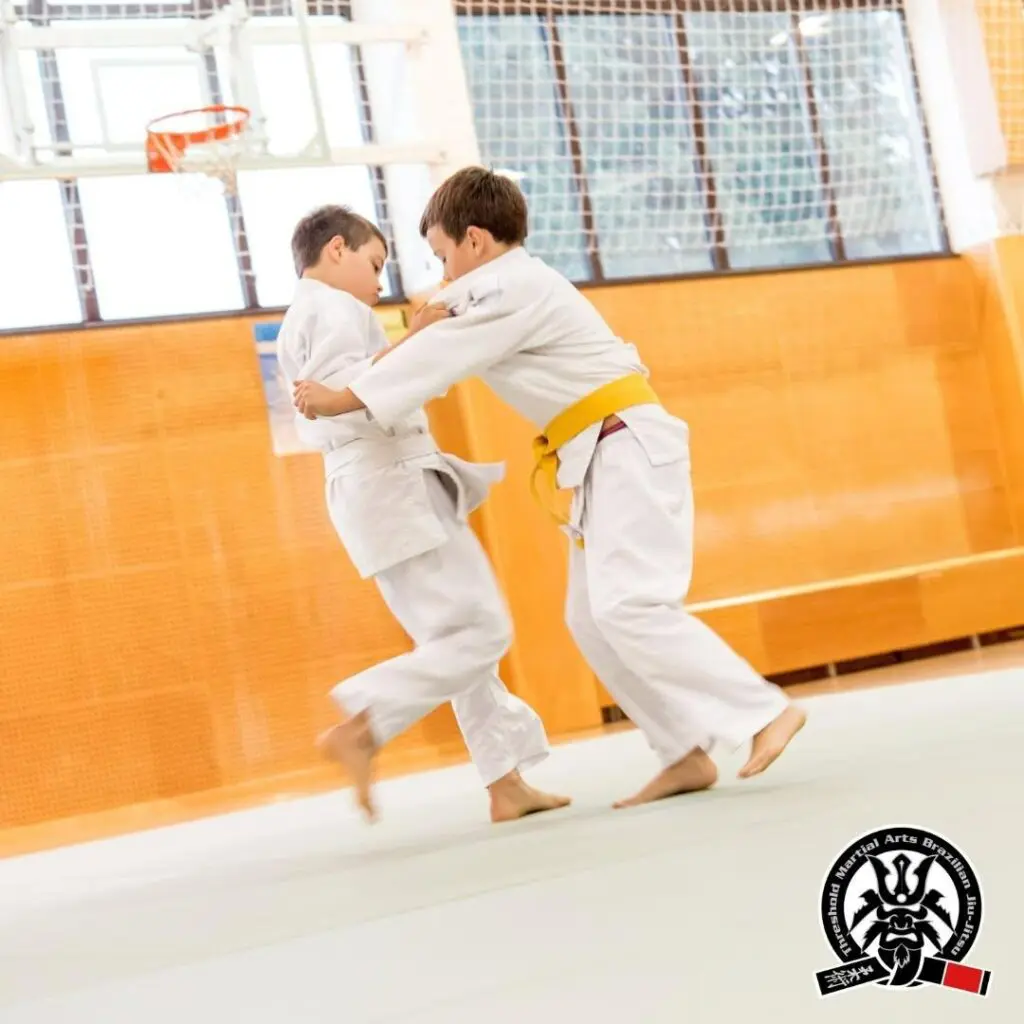
This principle of gradual, developmentally appropriate progress starts even before traditional beginner programs. In kids martial arts, students can build coordination, focus, confidence, and fundamental movement skills at an age-appropriate pace.
Instructors teaching martial arts for preschool often emphasize basic movement, listening, balance, and simple routines rather than complex techniques.
It is a useful reminder that long-term improvement is built by mastering one manageable skill at a time.
How to Improve Faster in Martial Arts Classes When You Hit a Training Plateau
Plateaus are normal, but we can push past them. Almost every student hits a wall at some point. Progress slows down, and it feels like nothing is improving.
This is a martial arts training plateau for beginners, and it happens to everyone.
The biggest mistake we make during a plateau is continuing to do exactly the same things. If the same routine stopped producing results, we need to change something.
- Change your solo practice routine every few weeks
- Train with different partners to face new challenges
- Ask for additional feedback from your instructor
- Focus on weaker areas instead of comfortable techniques
- Rest adequately, since fatigue can contribute to plateaus
Focused instructor feedback can be especially helpful during a plateau. An instructor can watch closely and identify technical problems we may not notice ourselves.
We should also work on our weaker fundamental movements rather than only practicing techniques we already feel comfortable performing. It is tempting to drill what we are good at, but improving weak areas is what makes us more complete martial artists.
Rest is something we often underestimate. When we are tired, our form breaks down and bad habits can develop. Taking appropriate recovery time helps us return to training with better concentration and control.
Start Your Martial Arts Journey With Purpose and Confidence
Progress in martial arts is real and within your reach.
Strong basics, consistent practice, and smart training habits work together to help you improve faster.
When you track your progress, train between classes, and focus on muscle memory, you build a foundation that supports everything you learn later.
Your next step is simple. Show up ready to learn, take mental notes, and ask your instructor for feedback.
Practice at home two or three times each week, focusing on the fundamental movements your instructor highlights. Revisit them until they feel natural.
That steady approach is one of the most effective ways to learn how to improve faster in martial arts classes without feeling overwhelmed.
Progress may not happen overnight, but when good habits become part of your routine, every class starts moving you forward.