When you first step onto the mat, Brazilian Jiu Jitsu can feel overwhelming. There are bodies moving in every direction, and it is hard to know where to be or what to do. But here is the thing: the adult Brazilian Jiu Jitsu positional hierarchy gives you a clear framework to follow.
It tells you which positions are strong, which are weak, and how to move from one to another. Once you understand this system, the chaos starts to make sense.
We all start from the same place, confused, a little lost, and unsure how to control a resisting opponent. The good news is that BJJ positions for beginners are not random.
There is a ranking system built on leverage, weight distribution, and body mechanics. From closed guard to half guard, from mount to rear mount, each position has a purpose.
Some spots give you control and set up submissions. Others put you in an inferior position where you need to protect yourself and improve your situation.
For adults learning these concepts through structured training, adult Brazilian Jiu Jitsu Classes in Mount Prospect provide the practical setting where positional ideas can be drilled against gradually increasing resistance.
Understanding the theory matters, but learning how each position feels against a moving training partner is what turns knowledge into usable skill.
We put this guide together to help you stop guessing and start understanding.
Whether you are working on guard passing principles, figuring out back mount control, or trying to survive your first live roll, this breakdown covers what you need.
Read on and let us walk you through every key position, transition, and escape together.
- What Is Positional Hierarchy in Brazilian Jiu Jitsu?
- Why Understanding BJJ Positions Helps Adult Beginners
- Understanding Neutral, Guard, and Top BJJ Positions for Beginners
- The Brazilian Jiu Jitsu Positional Ladder
- Why Guard Is Different From Other Bottom Positions
- How Guard Passing Changes the Positional Battle
- Understanding Side Control
- Why Mount Is Considered a Dominant Position
- Understanding Back Control
- What Beginners Should Do in Bad Positions
- Adult Brazilian Jiu Jitsu Positional Hierarchy and Escaping Under Pressure
- Understanding Brazilian Jiu Jitsu Transitions Between Positions
- Position Before Submission for Beginners
- Tapping and Submission Safety
- Common Questions About Adult Brazilian Jiu Jitsu Positional Hierarchy
- Start Your BJJ Journey With Confidence Today
What Is Positional Hierarchy in Brazilian Jiu Jitsu?
When we talk about the adult Brazilian Jiu Jitsu positional hierarchy, we mean a ranking system that helps us understand which positions give us more control, greater safety, and better opportunities to attack.
Some positions are stronger than others, and knowing the difference helps us make better decisions on the mat.
Think of it like a ladder. The higher we climb, the more positional advantage we usually have.
Getting to the top, however, takes patience and an understanding of what must happen at every step.
Position Before Submission Explained
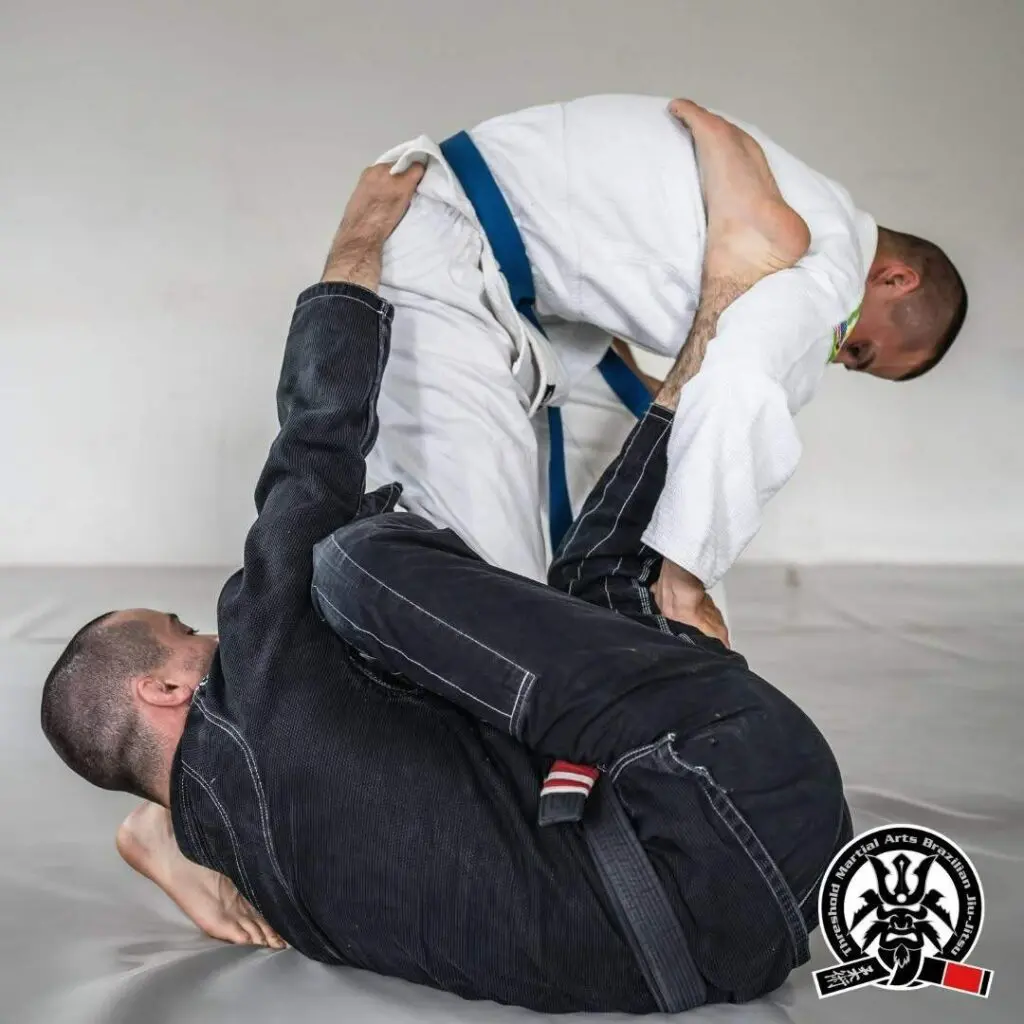
One of the first things we learn in BJJ is “position before submission.” This means we focus on achieving reliable control before trying to finish with a submission.
Why does this matter? Because attacking from an unstable position often fails. Worse, it may give the opponent enough space to escape, reverse us, or improve their own position.
Instead, we establish control, remove their easiest escape routes, and then look for an attack.
Why Some Positions Offer More Control Than Others
Not all positions are equal. Some let us use gravity, weight, and leverage efficiently.
Others give the opponent more room to turn, frame, recover guard, or escape.
The dominant positions in Brazilian Jiu Jitsu are generally those that restrict the opponent’s movement while allowing us to attack without exposing ourselves unnecessarily. Good positional control reduces space and forces the opponent to solve several defensive problems at once.
Offensive Position vs Defensive Position
We can also think about positions as offensive or defensive. An offensive position means we have established enough control to advance or attack.
A defensive position means our first priorities are survival, protection, and escape.
Recognizing which situation we are in changes what we should do next. From an inferior position, we protect ourselves and improve.
From a dominant position, we maintain control and patiently create opportunities.
Why Understanding BJJ Positions Helps Adult Beginners
Many adults start BJJ feeling completely lost during live rolling. Movements happen quickly, unfamiliar positions appear without warning, and it can be difficult to know what deserves immediate attention.
Once we understand the BJJ position ranking, that chaos becomes easier to organize. Instead of reacting randomly, we can ask ourselves a simple question: where am I in the positional hierarchy right now?
Reducing Confusion During Rolling
Rolling without positional knowledge feels like navigating without a map. We do not know whether we are safe, whether the opponent is about to improve position, or whether we should attack.
Learning the hierarchy gives us reference points. We begin to recognize when we need to protect our neck, when we need to recover guard, and when we have enough control to advance.
That knowledge does not make live rolling slow, but it makes the experience feel slower mentally because we know what to prioritize.
Knowing When to Attack and When to Defend
Understanding position teaches patience. If we are underneath mount, chasing an attack usually makes little sense. Our attention should be on defensive structure and escape.
If we are controlling someone from mount or back control, we do not need to rush. We can maintain balance, anticipate the opponent’s reactions, and attack when the position creates an opening.
This kind of decision-making helps us conserve energy and become more deliberate.
Using Position as a Decision-Making Framework
Positions give us a simple framework:
First, are we safe?
Second, can we improve our position?
Third, is there a controlled submission opportunity?
Understanding Neutral, Guard, and Top BJJ Positions for Beginners
Before looking at the complete positional ladder, it helps to understand 3 broad categories: neutral positions, guard, and top control positions.
Starting From a Neutral Position
A neutral position is one where neither person has established meaningful control. This often happens while standing, during scrambles, or after a reset.
Neutral situations are important because small decisions can determine who reaches a favorable position first. Balance, posture, grips, and awareness all matter before either person establishes control.
What the Guard Does
Guard is one of the defining concepts of Brazilian Jiu Jitsu. When we are underneath an opponent but still have our legs positioned between our body and theirs, we have some form of guard.
Guard acts as a defensive structure, but it can also support sweeps, reversals, and submissions. This is why being underneath someone in BJJ does not automatically mean we are losing.
Open Guard and Closed Guard
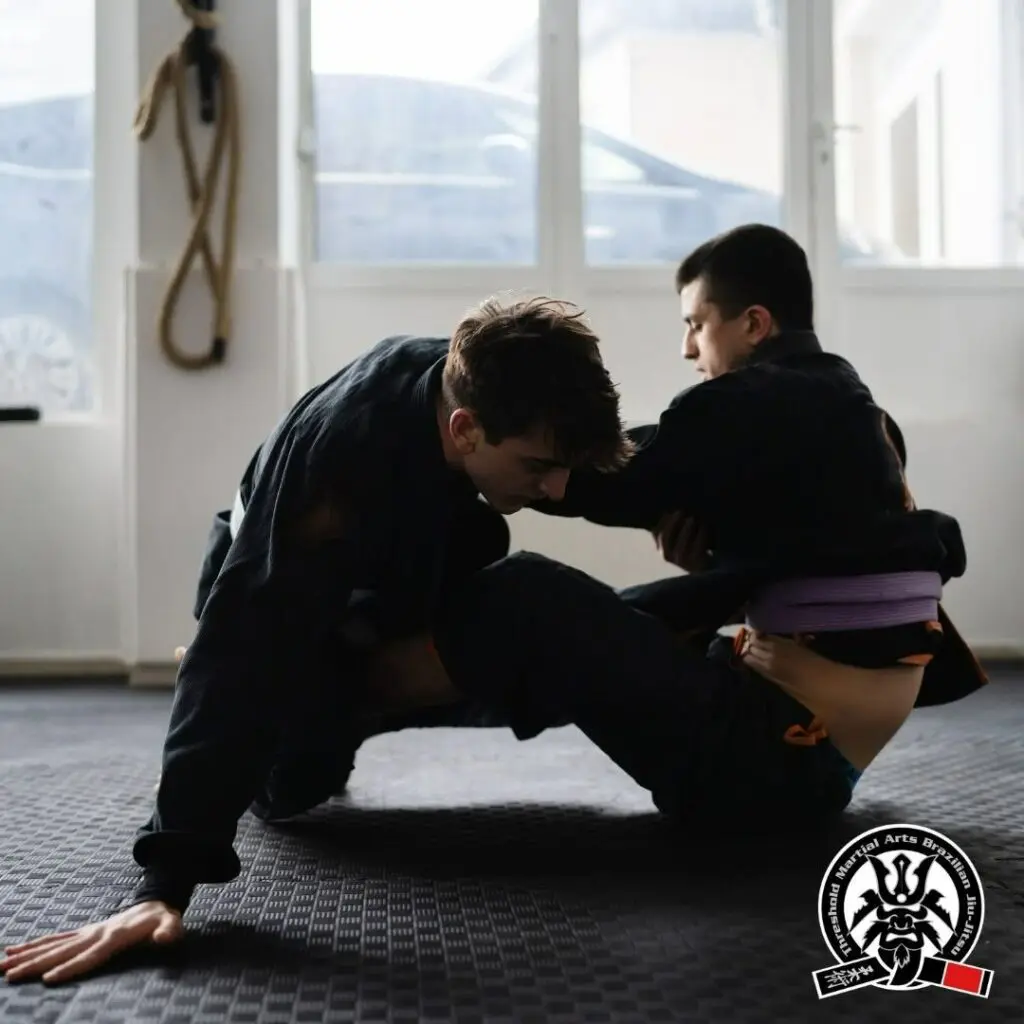
Two common beginner guards are closed guard and open guard.
In closed guard, we wrap our legs around the opponent’s waist and connect our ankles behind them. This helps restrict movement and provides a relatively clear structure for beginners.
In open guard, our legs are not locked. We use our feet, knees, hips, and grips to manage distance and prevent the opponent from getting around our legs.
Open guard offers greater movement, but it also requires more awareness because the top person has more passing directions available.
Top Position and the Goal of Passing
When we are on top of someone’s guard, our objective is usually to pass their legs and establish control over the upper body.
Simply getting around the feet does not automatically mean the pass is finished. We still need to establish a stable position such as side control.
This difference between movement and control is important throughout BJJ.
The Brazilian Jiu Jitsu Positional Ladder
Now we can look at the adult Brazilian Jiu Jitsu positional hierarchy as a ladder. As we move toward more dominant positions, we generally gain more control while reducing the opponent’s attacking options.
Guard
Guard occupies a unique place in the system. From the bottom, we are not in a dominant top position, but we still have meaningful defensive and offensive tools.
A good guard can slow the top person’s progress, create sweeping opportunities, and sometimes produce submissions.
Half Guard
Half guard sits between full guard and a completed guard pass. In half guard, one of the top person’s legs remains trapped between the bottom person’s legs.
For the bottom person, half guard can provide an important defensive connection that prevents full side control. For the top person, it may represent partial progress toward completing the pass.
Side Control
Side control is one of the first clearly dominant top positions. We have moved beyond the opponent’s legs and can control their upper body from the side.
This creates a major positional advantage in BJJ because we can apply pressure, threaten submissions, or advance toward mount or back control.
Knee-on-Belly
Knee-on-belly is a mobile controlling position where one knee applies pressure across the opponent’s torso while the other foot helps us maintain balance.
It often creates reactions. As the opponent pushes, turns, or tries to relieve pressure, opportunities may appear to transition into mount or another dominant position.
Mount
Mount is one of the strongest positions in Brazilian Jiu Jitsu. We sit over the opponent’s torso while controlling balance with our knees, hips, and upper body.
Mount gives us gravity, access to the arms and neck, and a significant advantage in both sport grappling and positional control.
Back Control
Back control, sometimes called rear mount, is often treated as the highest-value position in the hierarchy.
When we control the opponent from behind, they cannot easily see our attacks or directly attack us. With effective hooks, chest connection, and upper-body control, the position can be extremely difficult to escape.
Why Guard Is Different From Other Bottom Positions
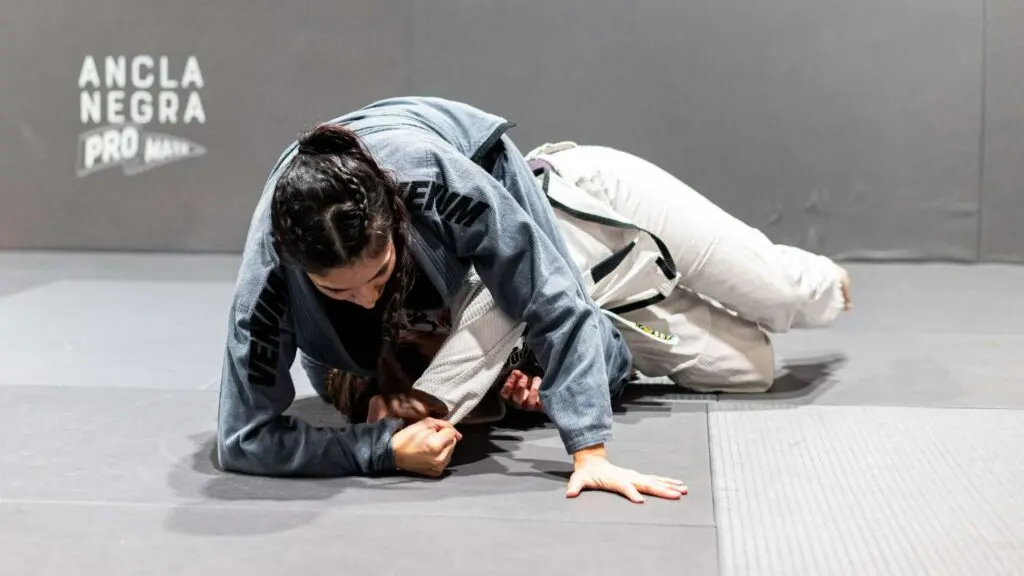
Guard is unusual within the adult Brazilian Jiu Jitsu positional hierarchy because it is not purely defensive. A skilled guard player can control distance, off-balance the top person, reverse the position, or create submission opportunities.
Defensive Control From the Bottom
From guard, our legs serve as barriers and control tools. We use them together with our hips, grips, and frames to influence the opponent’s posture and movement.
The ability to control a resisting opponent from underneath is one of the defining characteristics of Brazilian Jiu Jitsu.
Guard Retention
Guard retention means preventing the top person from clearing our legs and establishing side control.
Hip movement is critical. When the opponent changes angles, we use our hips and legs to stay aligned with them. If we can consistently return our knees or feet between our body and theirs, we make passing much more difficult.
Sweeps and Reversals
Sweeps allow us to reverse the situation and move from guard on the bottom to a top position.
Good sweeps are based on timing, leverage, balance, and controlling the opponent’s ability to post.
Rather than trying to overpower someone, we manipulate their structure and direct their weight toward an area where they cannot maintain balance.
Submission Opportunities From Guard
Guard can also create attacks such as triangles and arm locks. These possibilities explain why the bottom player must still be respected.
However, beginners should not let submission hunting replace positional awareness. Guard remains effective because its structure is maintained first.
How Guard Passing Changes the Positional Battle
Guard passing is one of the most important skills for the top player. It describes the process of moving beyond the opponent’s legs and establishing upper-body control.
Understanding adult Brazilian Jiu Jitsu guard passing principles helps beginners see that passing is not simply about moving faster than the bottom player. Effective passing depends on posture, pressure, controlling frames, managing distance, and stabilizing the position once the legs are cleared.
What Counts as Passing the Guard?
A guard pass is complete when we have moved beyond the opponent’s legs and established stable positional control.
Many beginners believe they have finished the pass the moment they move around the knees. But if the bottom person can immediately turn, insert a leg, and recover guard, the position was never stabilized.
Control finishes the pass.
Control Before Advancement
This connects directly to BJJ position before submission. We should not rush from one movement directly into another simply because the next position appears available.
After passing, we settle our weight, control the opponent’s shoulders and hips, and make sure guard recovery is difficult. Only then do we think about advancing.
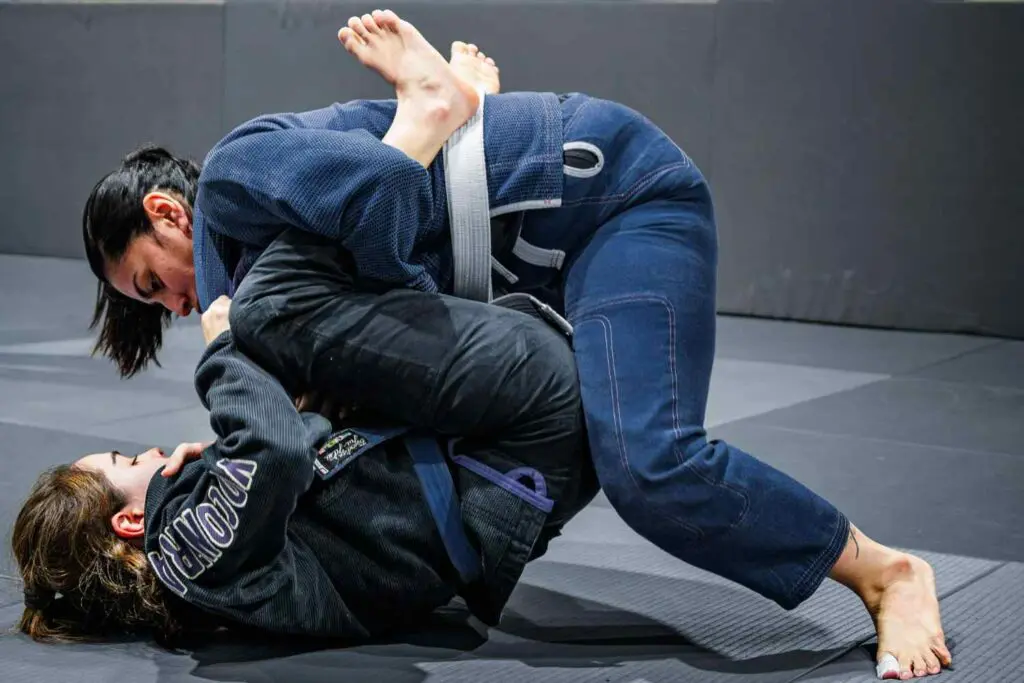
Pressure, Frames, and Movement
Passing involves a continuous relationship between pressure, defensive frames, and movement.
The top player uses pressure and positioning to restrict movement. The bottom player uses frames to maintain space. The passer then adjusts angles or redirects around those frames.
Learning this interaction helps beginners understand why passing cannot depend only on strength.
Why Beginners Should Avoid Rushing the Pass
Rushing often causes us to lean too far forward, lose balance, or leave space around our hips. These mistakes give the guard player opportunities to sweep, recover, or attack.
Controlled passing builds better habits. It teaches us to recognize what obstacle must be removed before we move forward.
Understanding Side Control
Side control is often where beginners first experience genuine positional dominance—and genuine positional discomfort.
Why Side Control Is a Major Positional Advantage
In side control, we have cleared the opponent’s legs and established contact with their upper body. Their strongest guard tools are no longer directly between us.
We can stay in control, transition to mount, move toward the back, or begin creating submission opportunities.
Controlling the Hips and Shoulders
Good side control focuses heavily on the opponent’s hips and shoulders.
If we can limit the shoulders from turning and prevent the hips from creating useful angles, escaping becomes much harder.
The goal is not simply to press downward. It is to control how the opponent can rotate and reposition their body.
Preventing Guard Recovery
From the bottom, the opponent usually wants to create enough space to insert a knee or leg between our bodies.
From the top, we respond by adjusting our weight and controlling the hips before they rebuild their guard.
Side control is therefore active. We continuously respond to movement rather than assuming the position will hold itself.
Moving From Side Control to Mount
When we transition to mount, we should move carefully.
We maintain upper-body control while creating a path for the knee to cross the opponent’s body. Once we arrive in mount, we stabilize before attacking.
This demonstrates how Brazilian Jiu Jitsu transitions should work: control the current position, move deliberately, and establish the next position before continuing.
Why Mount Is Considered a Dominant Position
Mount sits near the top of the adult Brazilian Jiu Jitsu positional hierarchy because it combines gravity, balance, control, and attacking opportunities.
Weight Distribution
In mount, effective weight distribution helps make the opponent carry our weight while still allowing us to react.
If our balance moves too far in one direction, the opponent may bridge or turn us. If our hips are poorly positioned, they may create space to recover half guard.
Good mount is therefore about controlled pressure rather than simply sitting heavily.
Maintaining Balance
The opponent will bridge, push, turn, or move their hips to create escape opportunities.
Our job is to respond with small adjustments. We change our base, reposition our hands, or shift our hips without making large movements that compromise control.
Isolating the Arms
Mount also gives us opportunities to separate the opponent’s arms from their strongest defensive positions.
When an arm becomes isolated, attacks become easier to develop. However, we should create the isolation through pressure and positioning rather than aggressively pulling the limb away from the opponent.
When Submission Opportunities Appear
Submissions often become available when the bottom player reacts to positional pressure.
A push may expose an arm. A turn may open the neck. A bridge may temporarily compromise another defensive structure.
Good positional control makes these reactions easier to recognize.
Understanding Back Control
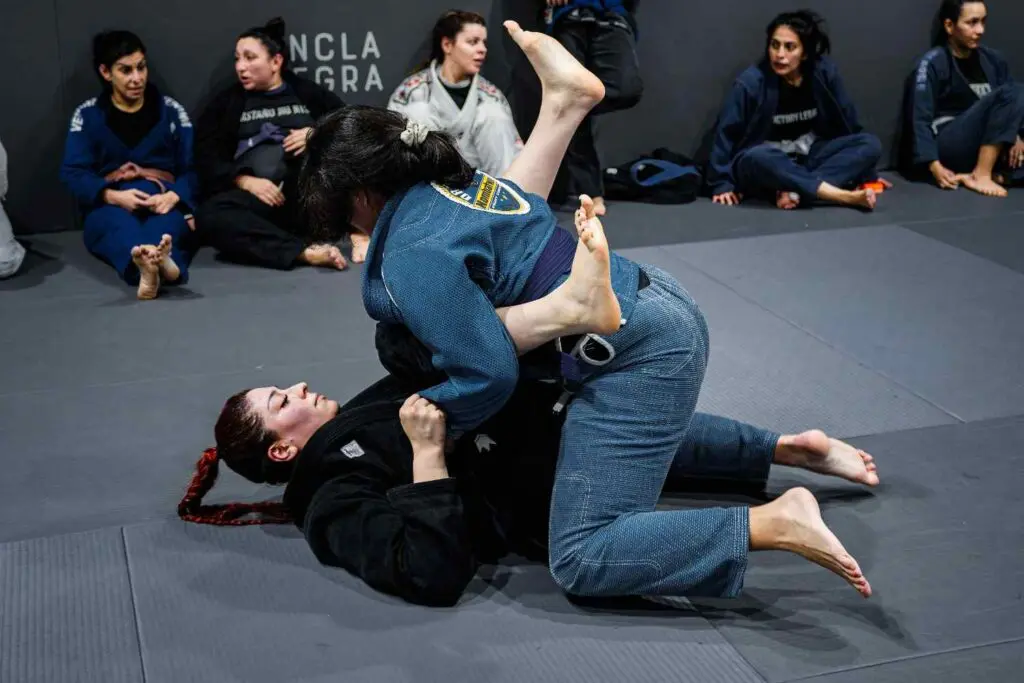
Back control is one of the most dominant positions in BJJ because the opponent has limited visibility and very few direct attacking options.
Why the Back Is Difficult to Defend
When we are behind someone, they cannot easily see our grips or predict which side the attack will come from.
Meanwhile, they must address both positional control and potential attacks to the neck.
This makes back mount control strategically powerful.
Hooks and Body Position
Traditional back control uses 2 hooks, with our feet positioned inside the opponent’s thighs.
The hooks help keep our hips connected while our chest stays close to their back. Upper-body control, often through a seat belt grip, prevents them from easily turning to face us.
Maintaining Control Before Attacking
Even from the back, the principle remains the same: control first.
Before attacking the neck, we make sure our connection is stable. If we rush a submission while our hooks or upper-body control are loose, the opponent may escape during the attack.
Submission Safety From Back Control
Chokes must be applied gradually and under control. The goal of training is to learn technique, not to see how long someone can resist.
When the partner taps, the submission ends immediately.
That habit protects everyone and allows us to train consistently over the long term.
What Beginners Should Do in Bad Positions
Getting stuck underneath someone is a normal part of learning BJJ. Every beginner experiences mount pressure, side control, back control, and failed guard retention.
The goal is not to avoid these positions completely. The goal is to learn how to respond intelligently.
Protect Yourself Before Trying to Escape
Our first priority is immediate safety.
If the opponent is threatening our neck or isolating an arm, we need to address that problem before beginning a larger positional escape.
Ignoring the submission while trying to move usually creates more danger.
Frames and Defensive Structure
Frames use the skeletal structure of our arms or legs to prevent the opponent from collapsing all their weight directly onto us.
A frame is different from trying to bench-press the opponent away. Proper structure requires less energy and creates the space needed for movement.
Creating Space
Once our defensive structure is established, we begin creating space.
Hip escapes, often called shrimping, help move our hips away while our frames keep the opponent from immediately closing the distance again.
Even a few inches can be enough to begin rebuilding guard.
Recovering Guard
The next step is often guard recovery.
We work to insert a knee, shin, or foot between our body and the opponent. Once one leg enters the space, we have started rebuilding a defensive barrier.
Guard recovery commonly happens one small movement at a time.
Reversing or Improving Position
Sometimes a complete escape is not available, but a smaller improvement is.
Moving from mount into half guard, for example, is still progress because the opponent has lost some positional control.
Beginners should learn to value these incremental improvements rather than expecting every escape to happen in one dramatic movement.
Adult Brazilian Jiu Jitsu Positional Hierarchy and Escaping Under Pressure
Escaping is one of the most challenging parts of Brazilian Jiu Jitsu. When someone is applying pressure from a dominant position, the instinct is often to push harder, hold our breath, and move urgently.
Usually, that makes the situation worse.
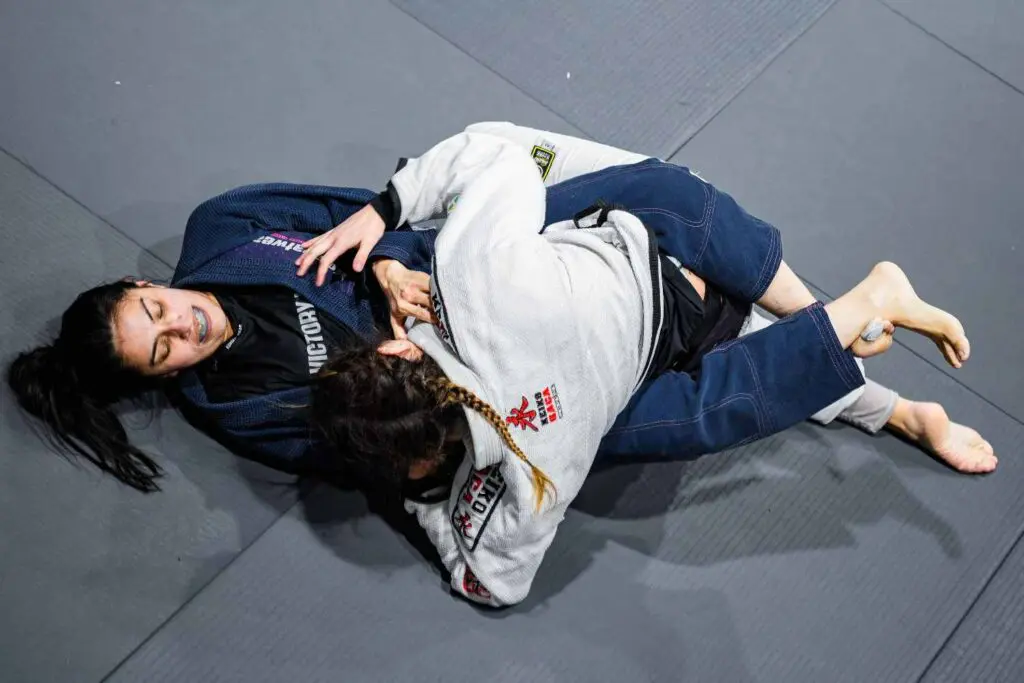
Understanding adult Brazilian Jiu Jitsu positional escapes as a sequence of defensive priorities helps beginners approach these situations more methodically. Good escapes are built around recognizing immediate threats, establishing frames, creating space, moving the hips, and recovering a safer position rather than relying on one explosive effort.
Why Panic Makes Escapes Harder
When we panic, our muscles tense and our breathing becomes inefficient. We burn energy quickly while becoming less coordinated.
A more experienced partner can often feel this tension and simply maintain position until we tire.
Learning to remain calm under pressure is therefore part of escape technique itself.
Recognizing the Immediate Threat
Before escaping, we need to identify the problem correctly.
Is the opponent simply holding side control? Are they isolating an arm? Is our neck exposed? Are they about to advance to mount?
The answer determines what deserves our attention first.
Escaping in the Correct Sequence
Effective positional escapes usually follow an order.
First, protect against the immediate submission threat.
Second, establish defensive structure.
Third, create enough space to move.
Fourth, use hip movement to recover guard or improve position.
Skipping these stages makes escapes much less reliable.
Accepting Small Positional Improvements
Escapes often happen gradually.
Mount to half guard is progress.
Half guard to full guard is progress.
Side control to a position where we are turned onto our side with a knee inserted is progress.
Understanding the hierarchy lets us recognize these smaller improvements as meaningful steps toward safety.
Understanding Brazilian Jiu Jitsu Transitions Between Positions
Transitions are the moments between established positions. They can feel chaotic because control is temporarily changing, but they are also some of the most important moments in BJJ.
Why Transitions Create Opportunities
When someone moves from one position to another, their weight, grips, and base must change.
Those adjustments can create brief openings for escapes, reversals, or attacks.
Learning to recognize these windows takes experience, but beginners can develop the habit of staying attentive whenever the opponent begins moving.
Stabilizing Before Advancing
After reaching a better position, our first task is stabilization.
We establish balance, secure control, and prevent the opponent from immediately reversing the transition.
Only after the new position is secure should we advance again.
Recognizing Transitional Openings
Many useful openings appear because someone reacts.
An opponent escaping mount may expose their back. Someone defending side control may create enough space for us to transition to knee-on-belly. A guard player trying to recover may temporarily leave another passing direction available.
Live rolling teaches us to notice these moments.
Avoiding Position Hunting
Position hunting means chasing a higher-value position before we have controlled the current one.
Beginners sometimes move from side control toward mount too quickly, only to leave enough space for the opponent to recover guard.
Instead, we should flow through the hierarchy deliberately. Every new position should be earned and stabilized.
Position Before Submission for Beginners
BJJ position before submission is more than a phrase. It is a way of organizing our entire approach to grappling.
Why Chasing Submissions Can Cost Position
Submission attempts require us to move.
If we reach aggressively, shift our balance, or release an important control point, the opponent may use that moment to escape.
This is why beginners often lose a dominant position immediately after trying to attack.
Control Creates Safer Attacks
When we establish strong control first, the opponent has fewer choices.
They may be forced to defend a particular direction, expose an arm, or turn in a predictable way.
The submission then grows naturally from the position rather than depending on speed or strength.
Submission Attempts as Part of Positional Strategy
A submission attempt can also create a positional reaction.
Even if the opponent successfully defends, their response might expose the back or allow us to advance.
As our experience grows, we begin to see submissions and positions as connected rather than separate techniques.
Tapping and Submission Safety
Safety is one of the most important parts of learning BJJ. Tapping is the communication system that allows us to practice realistic submissions while protecting one another.
What Tapping Means
Tapping means we are submitting and want the action to stop.
We can tap the opponent’s body, tap the mat, or verbally say “tap.” Once the signal occurs, the submission must be released immediately.
Why Beginners Should Tap Early
Beginners should tap early enough to avoid unnecessary injury.
There is no benefit to waiting until a joint is already painful or a choke is fully locked. Tapping allows us to reset, learn what happened, and continue training.
Respecting Your Training Partner
The person applying the submission has equal responsibility.
We apply techniques gradually, maintain control, and give our partner time to recognize the position and tap.
Training partners allow us to improve, so protecting them is part of good BJJ practice.
Resetting After a Submission
After the tap, we reset and continue.
Rather than treating the submission as a win or loss, we can use it as information. What position led to the attack? What defensive mistake happened earlier? What could we recognize sooner next time?
This mindset turns every roll into a learning opportunity.
Common Questions About Adult Brazilian Jiu Jitsu Positional Hierarchy
1. What is the positional hierarchy in Brazilian Jiu Jitsu?
Brazilian Jiu Jitsu positional hierarchy is a framework for understanding which positions provide greater control, safety, and attacking opportunities. Beginners learn to improve position gradually, moving from inferior situations toward stronger positions such as side control, mount, or back control before attempting submissions.
2. Why is position before submission important in BJJ?
Position before submission teaches us to establish reliable control before attacking. A strong position limits the opponent’s movement while reducing the chance of losing balance or getting reversed.
For beginners, this principle creates a more methodical approach to grappling and makes submission opportunities easier to recognize.
3. What should a beginner do when stuck in a bad BJJ position?
A beginner should first stay calm and identify any immediate submission threat. Next, they should establish defensive frames, protect vulnerable areas, create space, and work toward guard recovery or another improved position.
Escapes become more reliable when each problem is solved in the correct order.
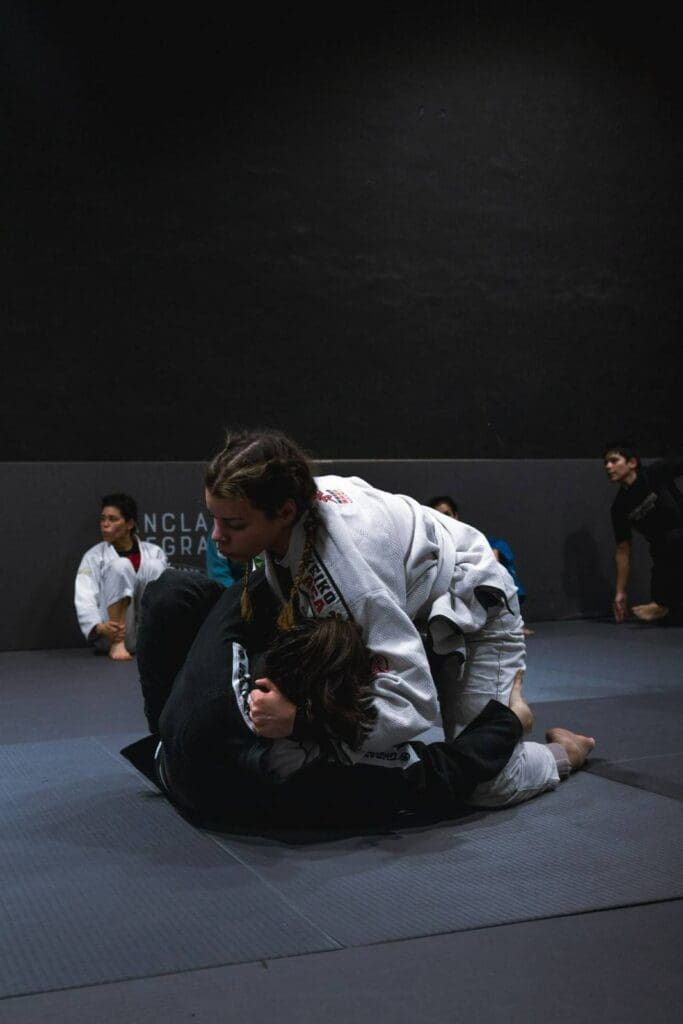
Start Your BJJ Journey With Confidence Today
Understanding the adult Brazilian Jiu Jitsu positional hierarchy gives us a framework for making sense of what happens during training.
We learn why side control, mount, and back control offer greater positional advantages.
We also understand why guard remains useful from the bottom and why escaping requires patience, structure, and proper sequencing.
These concepts help us stop treating BJJ as a collection of unrelated techniques. Guard passing connects to side control. Side control connects to mount. Mount may lead to the back.
A failed position may require frames, hip movement, and guard recovery. Every stage is connected.
For beginners, one of the best ways to develop this awareness is to focus on just a few positions at a time. Pick 2 positions from this guide and study what your job is in each one.
Ask yourself where your hips should be, where your weight belongs, which spaces need to be controlled, and what your next positional improvement should be.
Then drill those movements repeatedly.
Muscle memory does not come from reading about a technique once. It develops when we perform the same movement enough times that our body begins recognizing the situation automatically. Controlled drilling builds the mechanics, and live training teaches us how to apply those mechanics when the opponent is moving and resisting.
The more time we spend recognizing positions instead of reacting blindly, the calmer BJJ becomes. We begin to understand why a guard pass worked, why an escape failed, or why an opponent was able to advance.
That is where meaningful progress begins.
Position by position, transition by transition, we stop seeing a confusing scramble and start seeing a system.
And once we understand the system, we can begin making smarter decisions every time we step onto the mat.