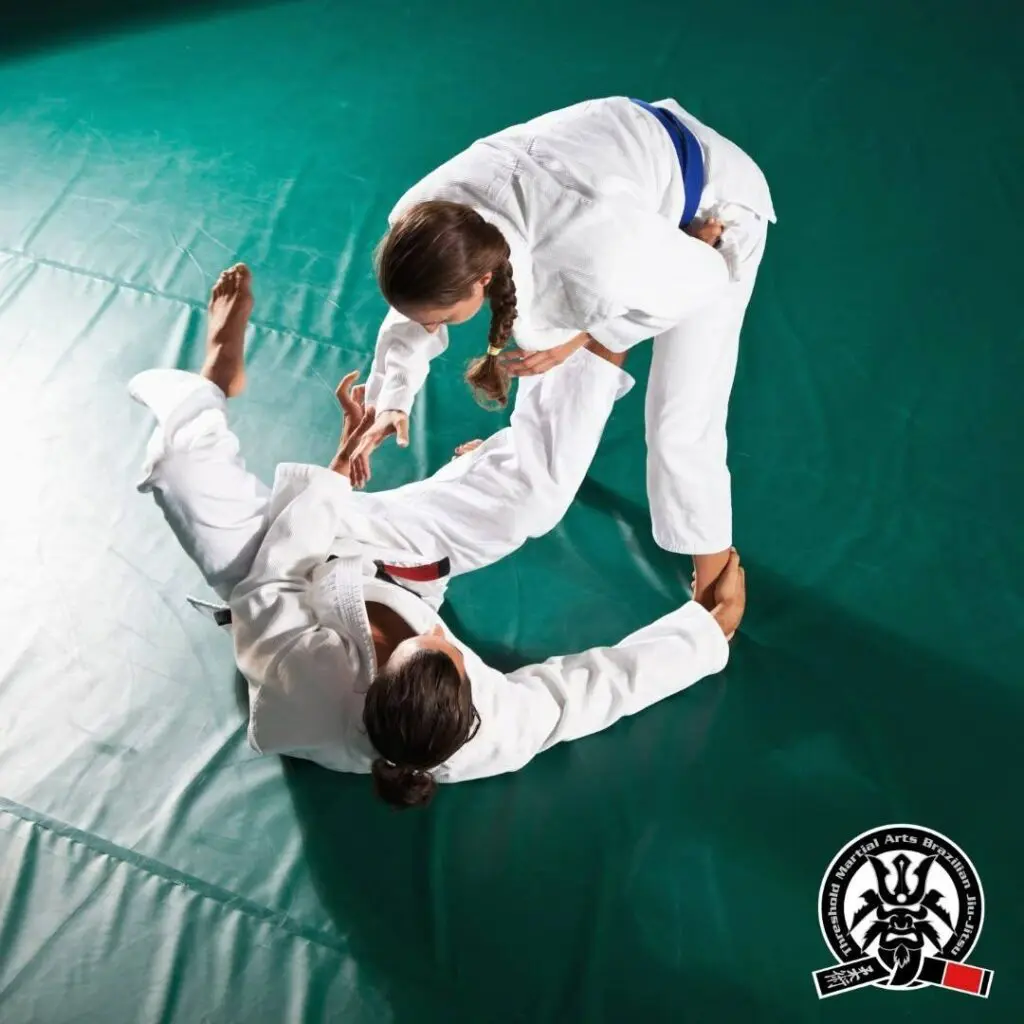
Adult Brazilian Jiu Jitsu guard passing principles are the foundation every beginner needs to build real progress on the mat. BJJ continues to attract adults who want to develop practical grappling skills, improve fitness, and challenge themselves through structured training.
But for many beginners, one obstacle appears again and again: getting past the guard. Facing someone’s legs without knowing how to advance can quickly become frustrating.
We know how overwhelming it feels to have no clear idea what to do next. The good news is that BJJ guard passing for beginners breaks down into clear, repeatable concepts.
Things like BJJ passing posture, controlling distance in BJJ, and pressure passing principles are not as complicated as they first appear.
Once you understand the core ideas behind techniques like the torreando pass, knee slice passing, and the stack pass, everything starts to click.
These guard passing fundamentals give you a clear path forward every time you roll. Instead of memorizing dozens of disconnected techniques, you can build your game around principles that apply across different guards and situations.
Why Adult Brazilian Jiu Jitsu Guard Passing Principles Matter
Guard passing separates beginners from advancing grapplers. It is one of the first real challenges you face on the mat.
Understanding adult Brazilian Jiu Jitsu guard passing principles builds your foundation early. Without that foundation, your game can stall because you may struggle to move from neutral or defensive exchanges into positions where you can control your opponent.
Guard passing also makes more sense when viewed within the broader adult Brazilian Jiu Jitsu positional hierarchy. Passing the legs is not simply about escaping the guard. It is about moving into positions such as side control or mount, where you gain greater control and create more opportunities to advance.
Think about it this way. Every time your opponent puts you in their guard, they are trying to control you.
Your job is to manage that control, create an opening, and reach a stronger position.
The Role of Guard Passing in BJJ Positional Advancement
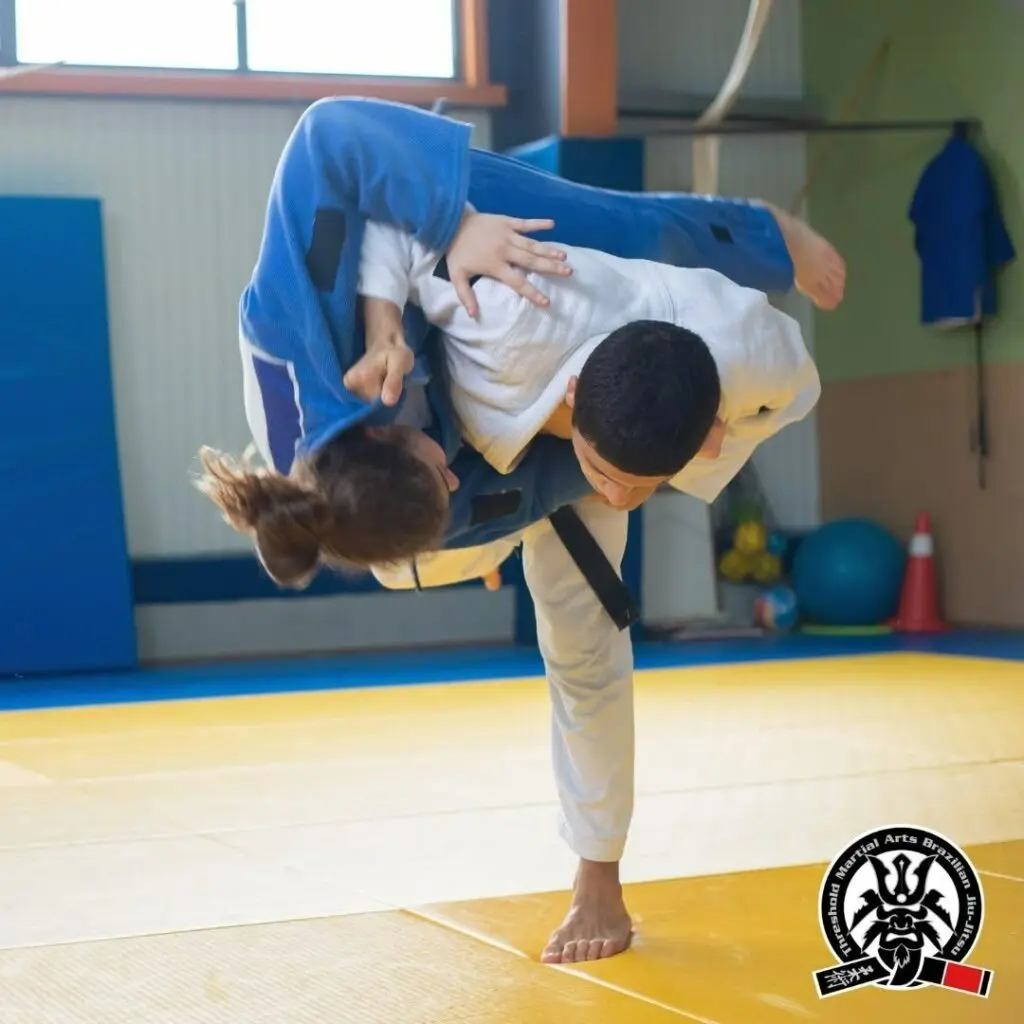
Passing guard leads to dominant positions and control. It is one of the clearest paths toward scoring, maintaining control, and eventually creating submission opportunities.
- Guard passing connects directly to BJJ positional advancement.
- Beginners gain confidence by improving guard passing skills.
- Progressing past guard opens scoring and submission opportunities.
Once we pass the guard, we may land in side control, mount, or another controlling position. Those positions give us clear advantages. Building strong guard passing habits early therefore pays off throughout the rest of our BJJ development.
Core Adult Brazilian Jiu Jitsu Guard Passing Principles Beginners Need
These principles give beginners a clear, repeatable passing structure. Instead of guessing, we follow a system that works again and again.
Building Proper BJJ Passing Posture First
Good BJJ passing posture protects you and creates pressure. Without it, your opponent can break you down before you even start your pass.
Posture is not just about looking strong. It keeps our weight balanced and our base solid. When our posture is weak, our opponent can pull us forward, disrupt our balance, and begin attacking.
- Keep your spine controlled and your head positioned safely.
- Strong posture makes it harder for your opponent to break you down.
- Solid posture supports every guard passing attempt you make.
We build posture before we think about moving. It is step one because every successful pass depends on having a stable base.
Controlling Distance in BJJ to Stay Safe
Controlling distance in BJJ determines who sets the pace. This is one of those concepts beginners often overlook.
Stay too close without proper control, and your opponent can trap you with sweeps or submissions.
Stay too far away, and they may have enough space to move their hips, establish hooks, and rebuild their guard.
We want to find the middle ground where we are close enough to apply pressure while limiting our opponent’s ability to attack. Learning to feel that distance comes with mat time and focused drilling.
How Pressure Passing Principles Help Beginners
Pressure passing principles teach beginners to use body weight effectively. Instead of relying completely on speed or strength, we use positioning and controlled pressure as tools.
Pressure passing can be especially useful for beginners because it rewards patience and structure. We do not need to move faster than our opponent.
We need to stay balanced, restrict their movement, and advance without giving away unnecessary space.
When we combine good posture with steady pressure, our opponent has a much harder time creating the movement needed to recover guard.
Understanding Brazilian Jiu Jitsu Guard Passing Concepts
Brazilian Jiu Jitsu guard passing concepts go beyond individual techniques. We need to think in systems rather than treating every pass as an isolated move.
For example, when one pass gets blocked, we do not necessarily stop. The opponent’s reaction may create the opening for another option.
Our grips, posture, pressure, and movement work together as one connected approach.
This type of problem-solving is developed throughout structured Brazilian Jiu Jitsu for adults, where positional understanding becomes just as important as learning individual techniques.
When our opponent reacts, that reaction gives us information. Instead of panicking or forcing a move, we learn to recognize what changed and adjust accordingly.
BJJ Guard Passing for Beginners: Starting the Pass
BJJ guard passing for beginners begins with grips and posture. From there, we can follow a simple order of operations.
- Establish useful grips or points of control.
- Set your BJJ passing posture before attempting movement.
- Control the distance to reduce your opponent’s guard options.
- Apply pressure or angle changes to limit movement.
- Move around or through the guard with controlled steps.
Each step connects to the next one. We do not skip ahead. Rushing the process is one of the most common mistakes beginners make.
Using Guard Passing Fundamentals to Build Good Habits
Repeating guard passing fundamentals builds lasting muscle memory. We cannot shortcut this part of development.
Good habits come from consistent drilling. We practice posture, grips, pressure, and distance before adding unnecessary complexity. That way, the basics become more automatic when we spar.
- Drill posture and grips before adding complex passing combinations.
- Practice controlling distance in BJJ during regular sparring.
- Review what stopped your guard passes after each roll.
Guard passing is a skill, and like any skill, it improves through repetition, patience, and focused practice.
Start Passing Guards With Confidence on the Mats
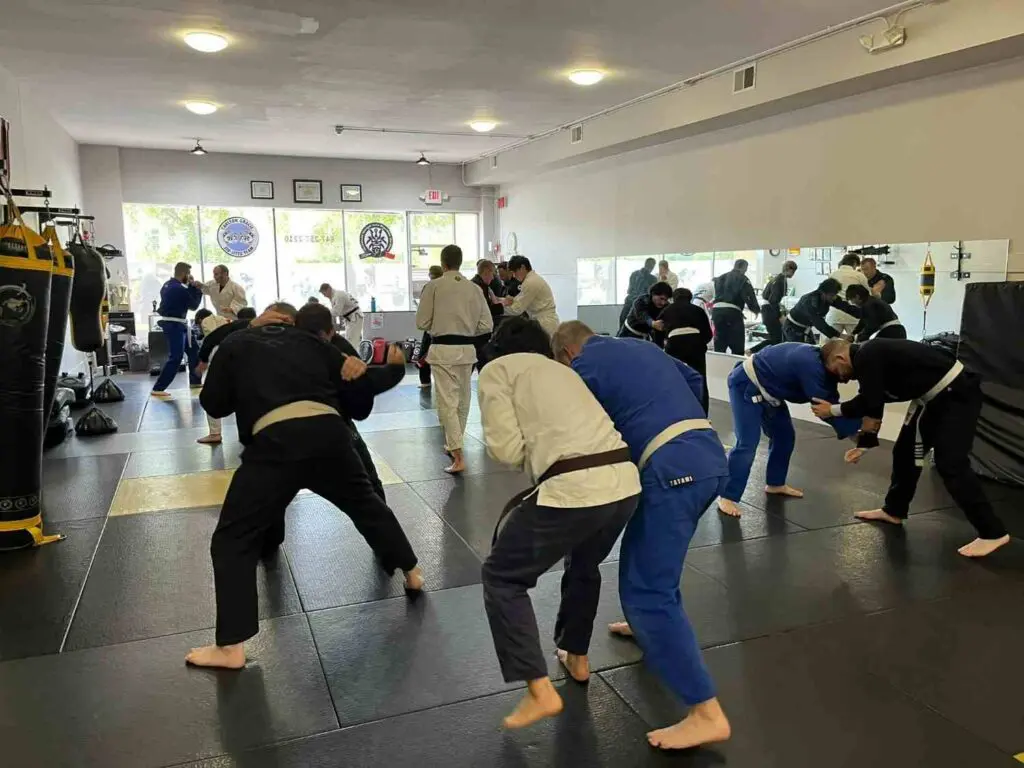
Learning to pass the guard changes how you understand BJJ. Adult Brazilian Jiu Jitsu guard passing principles bring posture, pressure, distance control, and positional awareness together to help you move beyond your opponent’s legs and establish stronger positions.
Drill it with attention to posture and positioning rather than trying to rush through every step.
As your understanding grows, individual techniques begin connecting into a larger system. Small, focused improvements in guard passing can eventually create much bigger improvements throughout your entire BJJ game.